Denver Tree Care Encyclopedia: Bur Oak (Quercus macrocarpa) 
americanarbor March 19, 2025

Bur Oak (Quercus macrocarpa) is a massive tree from the white oak family. Its acorns are the largest known oak fruits in Colorado and the rest of North America.

While there’s still some debate about whether the bur oak is truly native to Colorado, it has undeniably become a favorite along Denver’s streets. Its strong structure and striking appearance make it a top choice for planting in the city.

Appearance

Mature bur oaks have sturdy trunks and wide canopies. When fully grown, their massive crowns look like a giant green umbrella. This oak’s leaves are big and bold. They grow to be about 6-12 inches long and 3-5 inches wide. The leaves are deeply lobed with rounded edges. They are dark green in the summer and golden brown in the fall.

Young bur oaks have a smooth bark. However, when they get older, it becomes rough and deeply rigid.

Mature bur oaks can reach 60-70 feet in height. However, some giants can grow over 100 feet tall. Their canopies often spread just as wide as they are tall, which means a bur oak can easily cover a 70-foot wide area with shade. Because of their size, bur oaks need a lot of space to grow.

Why Bur Oak Grows Well in Denver

Bur oak has found a comfortable home in Denver because, once established, it is extremely tolerant of drought. Denver’s semi-arid climate doesn’t faze it. The tree’s deep root system allows it to tap into water far below the surface, helping it survive dry summers. Bur oak is also resistant to many pests and diseases.

There is still some debate among botanists about whether the bur oak is native to Colorado. Naturally, its range covers the Midwest and parts of the eastern Great Plains. While it may not have originally grown in large numbers in Colorado, it has been widely planted here for over a century.

Bur oaks can survive in different types of soil. They can grow in clay, loam, sandy soils, and even soils with low fertility. However, these trees perform well in deep and moist soils with a slightly alkaline to neutral pH.

Elevation and Temperatures

Bur oak does better at lower to mid-elevations, so it doesn’t fare well in the high Rocky Mountains. Usually, this tree grows well up to about 5,300 feet in elevation. This covers Denver and some nearby areas. When it comes to higher elevations, the shorter growing seasons become too harsh for bur oak to thrive.

This oak tree is cold-hardy. It can survive winter temperatures as low as -20°F. Coupled with impressive heat tolerance, this ability makes the bur tree perfect for Denver’s weather extremes.

Bur oak loves full sun. It needs at least six hours of direct sunlight every day to grow strong and healthy. That’s why these trees do best in wide-open spaces where the sunlight hits them from all sides.

Interesting Facts

Here are some interesting facts about this beautiful giant:

  • Fire-resistant bark: Thanks to its thick, corky bark, bur oak can survive grass fires that would kill many other trees.
  • Very long-lived: A healthy bur oak can live for 200 to 400 years. Some exceptional trees have lived even longer.
  • Wildlife magnet: Its acorns are a major food source for squirrels, deer, wild turkeys, and other animals.
  • Pioneer species: Bur oaks are often among the first trees to grow back after prairies or woodlands are disturbed.

If you’d like to learn more about bur oaks or other trees in Denver, please get in touch with our experienced arborists today.

Denver Tree Care Encyclopedia: Red Maple (Acer rubrum)  
americanarbor April 11, 2025

Red Maple (scientific name Acer rubrum) is a large and beautiful maple that offers ample shade. This tree is well-known and valued in Denver for its adaptability. The name comes from the tree’s key ability to grow a red element all year round. It has red buds in the winter, red flowers in the spring, and breathtaking red foliage in the fall.

The tree grows quickly, tolerates an impressive variety of soils, and transplants to other locations easily. Its beauty and ability to survive well in different weather conditions make Red Maple a big favorite in Denver.

Appearance

The Red Maple is a large tree with an oval canopy that provides sizable shade. Mature maples can grow between 40 and 60 feet tall with a spread of 30 to 50 feet.

During spring, before sprouting leaves, the tree grows small red flowers. Each tree can produce all male flowers, all female flowers, or sometimes both. The female flower produces the fruit later in the year.

In the summer, the tree grows deep green leaves with a silver undertone but the stalk and twigs are reddish. The foliage is always lush. The leaves are usually 2 to 4 inches long with 3-5 lobes.

The Red Maple’s bark starts smooth and light gray in younger trees and then matures into a rougher texture with vertical ridges. The tree’s distinctive samaras (winged seeds) are also red.

Why Red Maple Grows Well in Denver

Red Maple thrives in Denver because it adapts well to different soil types, including acidic and slightly alkaline soils. The tree achieves the best soil color in acidic to natural soil pH.

It also adapts well to fluctuating weather conditions. Although Red Maple isn’t native to Colorado, it has established itself successfully in the area. Its introduction to Denver was largely due to its remarkable resilience.

Another reason why Red Maple grows well in Colorado is its ability to tolerate moderate drought conditions (but only when already established). While the tree prefers moist, well-draining soils, it can also adapt to less ideal situations, which include compacted urban soils.

Elevation and Light

Red Maple thrives at elevations below 7,000 feet, making it well-suited for the Denver metro area and surrounding regions. However, as you head west into the Rocky Mountains—where elevations rise and temperatures drop—the tree has a harder time surviving. Cooler temperatures, shorter growing seasons, and drier conditions at higher altitudes limit its ability to take root and flourish.

When it comes to sunlight, Red Maple prefers full sun to partial shade. Ideally, it should receive at least six hours of direct sunlight daily. While the tree can tolerate some shade, too much shade can hinder canopy growth and affect foliage color. It performs well in urban environments where it can receive adequate sunlight despite the infrastructure.

Interesting Facts

Some of the interesting facts about Red Maple are:

  • Red Maple is one of the most widely distributed trees in North America, growing from Canada down to Florida.
  • Red Maple’s nickname is “swamp maple” because it naturally thrives in wet environments.
  • Thanks to its durability and fine grain, Red Maple wood is commonly used for furniture, flooring, and even musical instruments.
  • The tree provides food and habitat for a variety of wildlife, including birds, squirrels, and deer

While the tree offers many benefits, it can also present some challenges. Its aggressive root system has the potential to damage sidewalks and driveways. Additionally, Red Maple can be toxic to horses, so careful placement is essential when planting near equestrian areas.

For more information about Red Maple and other trees, please contact our certified arborists today. 

Denver Tree Care Encyclopedia: Ponderosa Pine (Pinus ponderosa)   
americanarbor May 14, 2025

Ponderosa Pine (scientific name Pinus ponderosa)  is a large pine tree that thrives in the Rocky Mountains. It has dark green needles and orange-brown bark. The tree adapts well to the changing weather conditions, including harsh winds and low temperatures.

These evergreen trees may lose some needles during drought years but usually appear luscious and beautiful all year round. Ponderosa Pine is a native Colorado tree that grows throughout North America.

Appearance

The Ponderosa Pine is a towering tree with a straight trunk and a wide canopy. Mature trees usually grow between 60 and 100 feet tall, but some can be as high as 200 feet. The canopy can be between 25 and 30 feet wide.

The tree has long needles, which are between 5 and 10 inches long. These needles usually grow in bundles of three. They are dark green and slightly twisted.

The bark of younger trees starts out dark brown to black, but as the tree matures, it transitions to a distinctive orange-brown color. This bark helps the Ponderosa Pine resist fire. That’s why it is a highly useful species in wildfire-prone areas.

The tree produces oval-shaped cones that range from 3 to 6 inches in length. These cones have stiff spines which are easy to recognize. When mature, they turn a reddish-brown color and release seeds.

Why Ponderosa Pine Grows Well in Denver

Ponderosa Pine thrives in Denver because it easily adapts to different soil types and tolerates a range of environmental conditions. This Colorado-native species has evolved to withstand the state’s semi-arid climate, harsh winters, and seasonal droughts.

This tree prefers well-draining soils, including sandy or rocky soil. However, it can also grow in loamy conditions. While young trees need occasional deep watering to help them establish strong roots, mature Ponderosa Pines can survive on natural precipitation alone.

Ponderosa Pine is less susceptible to bark beetles and fungal infections than other conifers. However, it can fall victim to Mountain Pine Beetle, Dwarf Mistletoe, and Striped Pine Scale.

Elevation and Light

Ponderosa Pine adapts perfectly to different elevations. It thrives at altitudes between 6,000 and 9,000 feet. In Colorado, it is common across the Front Range and into the lower foothills of the Rocky Mountains. At elevations above 9,000 feet, colder temperatures and shorter growing seasons can make it difficult for the tree to establish itself. However, some Ponderosa Pines manage to grow at 10,000 feet or even higher.

This pine tree is a full-sun species. It requires at least six hours of direct sunlight daily. That’s why the tree performs best in open landscapes. While Ponderosa Pine can tolerate some partial shade in its early years, too much shade can slow its growth and make it susceptible to disease.

Interesting Facts

Some of the most interesting facts about Ponderosa Pine are:

  • When the sun warms the mature Ponderosa Pine tree, its bark gives off a distinctive vanilla or butterscotch scent. It comes from the chemicals called terpenes.
  • This tree plays a vital role in the local ecosystem because it provides food and shelter for the wildlife.
  • Ponderosa Pine wood is great for making kitchen furniture. It’s one of the top choices for interior construction.
  • Native Americans used Ponderosa Pine to treat skin problems and to create an early form of chewing gum.
  • Ponderosa Pine is one of the most common plants in the Rocky Mountain National Park.
  • Ponderosa Pines have an impressive lifespan. In the right conditions, some of them can live for over 600 years.

To learn more about Ponderosa Pines and other Denver trees, please contact our team of professional arborists.

Effective Strategies for Controlling Aphids on Your Denver Plants This Summer
americanarbor June 9, 2025

Aphids are tiny insects that can become a serious nuisance. These soft-bodied pests feed on the plant sap and eventually cause leaves to wilt. While aphids can’t cause major damage to well-established plants, they can affect younger trees and ruin the aesthetic appeal of your garden.

Controlling aphids before they start reproducing is key to preventing an infestation. Understanding what steps to take can help you save your garden from these pests this summer and beyond.

What are Aphids? 

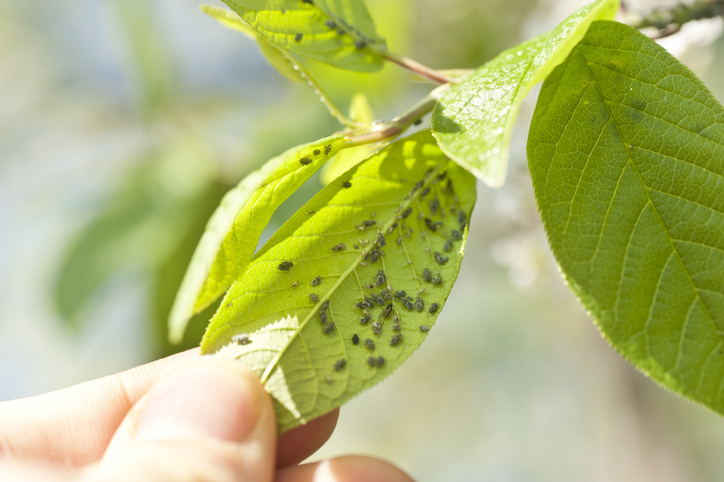
Aphids are small, pear-shaped insects that come in different colors, including green, black, yellow, and red. They often cluster on the undersides of leaves or around new plant growth. If you notice sticky residue (called honeydew) or sooty mold, you likely have an aphid problem.

These insects feed by sucking sap from plant stems and leaves. This weakens plants and may cause younger trees to grow poorly. Their honeydew secretion can also attract ants and encourage mold growth. While established plants can survive some aphid damage, young or weak plants may suffer serious harm.

While aphids are small, they reproduce rapidly. During the summer, females can do it without fertilization. They produce living young which immediately take up more space on the affected plant.

When it becomes too crowded for everyone, younger aphids develop into adults and fly to occupy nearby plants. In the late fall, females and males mate to produce eggs, which are equipped to survive the winter.

What Plants Do Aphids Prefer? 

Different aphid species prefer different plants. However, they can feed on virtually any tree or shrub in Denver. That’s why regular inspections are key to keeping your garden safe.

How to Get Rid of Aphids and Prevent Future Infestations

With over 350 species of aphids in Colorado, insect control may seem like a lost battle. However, some effective ways to get rid of these pests exist.

Spray With Water

A strong blast of water from a garden hose can knock aphids off plants and reduce their numbers. This method works best for minor infestations. You may have to repeat this regularly until all aphids are gone.

Use Insecticidal Soap

Insecticidal soap coats and suffocates aphids without harming beneficial insects. You would need to spray it directly on affected areas to make sure that all undersides of leaves are fully covered.  

Apply Neem Oil

Neem oil is a natural pesticide that disrupts aphids’ life cycle. Regular applications can control the aphid populations while keeping other plants safe. Mix two tablespoons of neem oil with a cup of water in a spray bottle and apply the mixture to the affected leaves.

Remove Infested Leaves

If an aphid infestation is small, pruning affected plant parts can stop the spread. Dispose of the pruned leaves and branches away from your garden to prevent re-infestation.

Natural Predators

Several beneficial insects feed on aphids and help keep their population in check. They are ladybugs, lacewings, and ladybeetles. Planting flowers like marigolds and daisies can encourage these helpful insects to stay in your garden.

Preventive Measures

To prevent aphid infestation in your garden, you need to inspect your plants regularly and keep them in top shape. Strong, well-watered plants are highly resistant to aphid damage.

However, even if your plant appears healthy while aphids are feeding on it, you still need to put up a fight. These insects can easily spread to other trees and shrubs in the garden and weaken them over time.  
For more information about dealing with common garden pests in Denver, please get in touch with our certified arborists and lawn care specialists today.

The Ultimate Year-Round Fertilization Schedule for Your Denver Lawn
americanarbor July 2, 2025

Denver homeowners know the complexities of taking care of their lawns in the harsh Colorado climate. If you want your yard to look green and beautiful, you need to make an extra effort. Otherwise, you could be facing bald patches, brown grass, and aggressive weeds.

The most important part of keeping your Denver lawn in top shape is fertilization. While the process itself isn’t complicated, the schedule may be. Setting up a solid maintenance routine right now can help you enjoy a healthy lawn in the upcoming season.  

General Schedule to Follow

The fertilization schedule can depend on your grass type and the general condition of the lawn. However, you can always just follow this simple routine:

  • Early Spring (March – April): As the snow melts and temperatures warm up, apply a slow-release nitrogen fertilizer. This will stimulate new growth after the long winter.
  • Late Spring (May – June): As summer approaches, switch to a fertilizer that’s high in phosphorus. Phosphorus strengthens the roots, which can help your lawn survive Denver’s hot summers.
  • Summer (July – August): You can take a break from fertilizing during the peak summer months. Instead, focus on keeping your lawn properly watered and mowing it regularly. Fertilizing during extreme heat can be more harmful than helpful.
  • Early Fall (September – October): When the weather cools down again, it’s time for another dose of slow-release nitrogen fertilizer. This helps your lawn build strength before winter.
  • Late Fall (Optional, October – November): If you want to give your lawn an extra boost, you can apply a second round of slow-release nitrogen. This optional step can help your grass store nutrients and survive the winters better.

Make changes to the schedule if extreme weather conditions hit. Do not fertilize the lawn during droughts or freezes, even if they occur during the scheduled months.

Best Type of Fertilizer for Your Lawn

Denver lawns do best with a slow-release nitrogen fertilizer in the spring and fall. Slow-release products feed your lawn over time. This encourages steady and healthy growth. In late spring, look for a fertilizer that has more phosphorus.

Be sure to read the label carefully. A fertilizer bag will have three numbers, for example, 20-10-10. These numbers represent the percentages of nitrogen (N), phosphorus (P), and potassium (K) in the product. For example, early and late in the season, a fertilizer higher in nitrogen will be best. In late spring, you’ll want a little more phosphorus.

If you have pets, you need to be careful about the fertilization process. Look for products that are labeled pet-friendly, or keep them off the grass until the fertilizer has been watered in and the lawn is dry.

The Best Time to Reseed Your Lawn

Sometimes, no matter how well you fertilize, your lawn might develop thin spots. Reseeding fills those bare patches and helps maintain a healthy turf.

In Denver, early spring is the best time to reseed. April – May are the best months to reseed when the soil temps are around 55 degrees which is the perfect environment for grass seed germination. The cooler temperatures and moist soil give new grass seeds the best chance to grow strong before summer. Plus, there’s less competition from weeds in the fall. If you reseed in the fall, there is a chance that rabbits will feed on your seed throughout the winter. 

When to Water Your Lawn

The watering schedule for your lawn can depend on the temperatures. However, the rule of thumb is to water three times per  week during the summer (before 10:00am) and 1 – 2 times  a week in the fall and spring. In the winter, only water your lawn once a week if temperatures are above 50⁰F.

Always water the lawn after you fertilize it. This can help the fertilizer sink further into the soil and wash away any substance from the blades.
If you’d like further guidance, please get in touch with our certified lawn care specialists. We can help you set up the perfect lawn maintenance schedule.

Aphids and Spider Mites: How to Identify and Get Rid of Them
americanarbor February 23, 2023

What are aphids and spider mites and what do they do?

Aphids and spider mites are very different pests, but they share some similarities. Aside from being very tiny and very destructive, they’re very different in terms of identifying characteristics and the type of damage they cause. Aphids are very tiny bugs that feed off of the sap in your plants’ leaves. Spider mites, on the other hand, are teeny little arachnids that chew on the leaves themselves. Aphids are about 1/4″ in length, and they can be black, brown, grey, yellow, white, or light green. Spider mites are even smaller, at around 1/50″ in length, and they’re typically a reddish brown hue.

What types of plants are at risk?

Since aphids and spider mites feed on a variety of plants, they’re happy to move from one plant to the next in your yard. They form colonies that cluster together on the underside of leaves, which causes your plants to become weakened. Nearly all plants are at risk of attracting aphids and spider mites, and these pests are most active during the spring and summer months.

How do you detect aphids and spider mites?

Since they’re so tiny, it can be difficult to see aphids and spider mites until your plants begin to show damage. If you suspect that these pests are present, grab a magnifying glass and closely inspect your plant’s leaves. Aphids usually hang out near the leaves, stems or buds of your plants, and they leave a sticky residue behind that’s called honeydew. Ants especially love to eat honeydew, so if ants are present, you’ve probably got an aphid problem.

Spider mites can be found on the underside of leaves, and they create webbing that can reach from the leaves to the stem of your plants. This webbing can also stretch from one plant to another as spider mites travel. Another sign of spider mites is small holes on the leaves of your plants.

If an infestation persists, leaves will begin to turn yellow, and they’ll eventually fall off.

What are the best treatment options?

Here are some of the most effective ways to get rid of aphids and spider mites.

Aphids

  • Spray leaves with cold water several times a day.
  • Apply insecticidal soaps, horticultural oils, or neem oil to the leaves of affected plants.
  • Spray leaves with a mixture of 1 quart water to 1 tsp dish soap several times a day for two weeks.
  • Use pesticides for severe infestations.

Spider Mites

  • Isolate the affected plants so they don’t spread.
  • Spray the leaves and stems with water several times a day.
  • Introduce neutral predators like ladybugs and other parasitic mites.
  • Apply neem oil or insecticidal oil to the leaves.
  • Apply insecticidal soaps that list potassium as the main ingredient.

Aphids and spider mites are very common pests that affect most plants and trees in the Denver area. They’re hard to spot, but without proper treatment, these tiny pests can wreak havoc on your plants. If you suspect an aphid or spider mite infestation, or if you’d like more information about how to keep your plants safe from pests, contact us today. Our experts at American Arbor Care would be happy to help.

Denver Tree Care Encyclopedia: Autumn Brilliance Serviceberry
americanarbor February 23, 2023

What Does an Autumn Brilliance Serviceberry Look Like?

The Autumn Brilliance Serviceberry is a showstopper year-round, and it unveils a new surprise every season. In the spring, beautiful pink buds bloom to reveal delicate white flowers that cover the bare branches of the tree. Butterflies and other pollinators are especially attracted to these blooms. 

As summer arrives, juicy purple berries form, which is a food source for a number of native birds. They’re also delicious in pies, jams, and raw, straight from the tree. The only challenge is harvesting the berries before the birds snatch them from the tree’s branches.

The foliage is a lovely shade of blue-green, but when autumn arrives, it becomes brilliant orange and red. This contrasts beautifully with the tree’s smooth, gray bark, and it stands out among other trees in the Denver area.

Where Does it Grow?

The Autumn Brilliance Serviceberry grows in nearly every state in the country, and it’s incredibly adaptable to a wide range of climates and soil conditions. It grows best in zones three through nine, which includes most of the landscape in Colorado. They’re hardy, beautiful, and adaptable, which makes them an ideal choice for home landscaping in the Denver area.

How Big Does it Get?

Expect your Autumn Brilliance Serviceberry to reach a mature height of around 20 to 25 feet, with a spread of 15 to 20 feet. If you plant a young tree, it can fairly easily be pruned to grow as an ornamental shrub, as well. They grow at a moderate rate, so your tree will quickly provide shade, attract wildlife, and provide sweet fruit for harvesting, right in your own yard.

What Does it Need to Grow?

These trees are hardy, and they’re very adaptable to a number of climates and conditions. 

What Type of Soil Does it Need?

Autumn Brilliance Serviceberry trees require well-drained soil in order to thrive and grow. It’s best to add compost when planting your tree, so it’s got the nutrients it needs to grow and produce fruit. It’s also important to ensure that your tree gets a moderate amount of water throughout the year.

How Much Light Does it Need?

Plant your tree in a place that receives full sun or partial shade. In order to produce bright, colorful leaves, lovely flowers, and juicy purple fruit, it’s important to ensure that your plant gets at least four hours of direct sunlight each day.

Are Autumn Brilliance Serviceberry Trees Native to Colorado?

Yes, the Serviceberry trees are native to North America, and thanks to their hardiness, they thrive in nearly every state in the US. You can find them throughout Colorado and on the east coast. In fact, George Washington planted these beautiful trees at his estate, Mount Vernon.

Interesting Facts

  • Autumn Brilliance Serviceberry trees are also called “Shadbush” and “Juneberry” trees.
  • The berries produced by these trees are referred to as “Sugarplums” and “Wild Plums.”
  • Native Americans and early settlers enjoyed eating the berries, and they believed they had medicinal properties.
  • The Autumn Brilliance is a natural hybrid of several different varieties of Serviceberry trees.

If you’d like to receive more information about the Autumn Brilliance Serviceberry, or if you’d like help incorporating one into your home landscape, contact us at American Arbor Care today.

Winter Watering Plants in Denver
americanarbor January 12, 2023

Denver winters are known for being very cold, and most plants have adapted to snowy conditions. Although the temperatures typically remain below freezing from late fall to early spring, it’s not uncommon for the area to experience warm, dry periods as well. Although warm and sunny temps may feel fantastic, they can lead to winter droughts that are harmful to plants. Let’s look at how to water your plants throughout the winter months so they are healthy and strong in the spring.

When Should I Water Plants in the Winter?

Colorado winters have a reputation for being cold and snowy, but that’s not always the case. Dry spells are common, and temperatures can fluctuate from very cold to sunny and mild. Snow and ice will melt and water your plants, but when temperatures are dry for a number of weeks, it’s important to water them. Dry periods can quickly become droughts for plants, and irregular watering can lead to weakened root systems. If there has been no precipitation for at least three weeks, it’s best to water your plants thoroughly. This will prevent root damage from occurring as a result of winter drought conditions, and your plants will thank you when spring arrives.

Make sure that when you water your plants, the temperature is above 40° F and the ground is not snow-covered. Frozen soil can’t absorb water, so it’s best to wait for the temperatures to warm up a bit. Water at the warmest time of day to ensure that temperatures remain above 40° F as the water soaks into the soil.

How Should I Water Plants Effectively in the Winter?

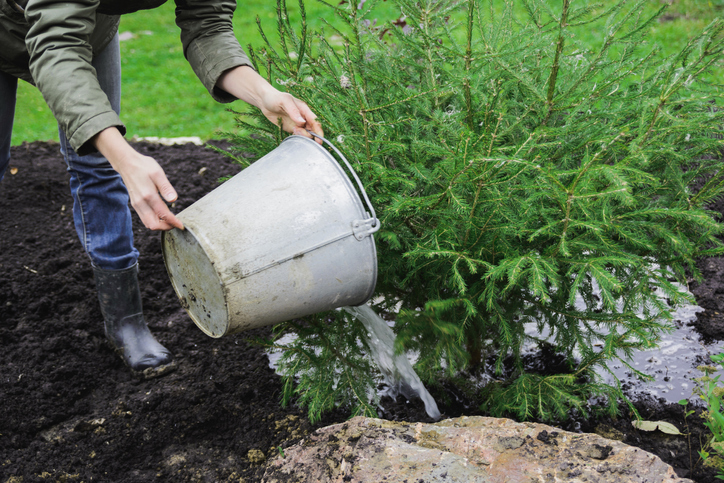
Water trees at the drip line, where the farthest ends of the branches would drip onto the ground. That way, the entire root system will get the water it needs. It’s also important to water about halfway from the drip line to the trunk of the tree. Trees require about 10 gallons of water for each inch of the trunk’s diameter, and a shrub needs 5 to 18 gallons of water, depending on its size.

Water your plants early in the day, when the sun is warmest, so the moisture has enough time to fully soak into the soil. If you wait too long, nighttime temperatures can dip below freezing, making it difficult for water to reach the roots.

Additionally, waterin when temperatures dip too quickly, can result in frost/freeze cracking.

You can also add a layer of mulch around the base of your trees and shrubs, to encourage better watering, and to provide protection to the roots underneath the soil.

What Plants Need Water Most in Winter?

Most trees and shrubs go into dormancy during the winter, but their roots continue to grow. This means they still need water to survive, or they’ll be weakened when spring arrives. Trees and shrubs that need water the most in Denver winters include evergreens, conifers, and plants with shallow roots like lindens, birches, and Norway and silver maples. Recently transplanted plants should also be watered regularly.  Evergreens and broadleaf evergreens on warmer days also benefit from foliage baths to increase humidity.

A Few Precautions

Freezing temperatures can lead to burst pipes and broken attachments, so it’s important to take precaution when watering plants in the winter months. When you’re finished using the hose, disconnect it from the spigot and drain it thoroughly. Otherwise, water inside the hose can freeze, causing it to crack, and your pipes can freeze, leading to disaster.

It’s also best not to use your sprinkler system during the winter months. Frozen water expands, and it can easily break attachments and water lines, which can mean expensive repairs in the spring.

If you’d like to learn more about caring for your plants during the winter months, contact us today. Our experts at American Arbor Care would be happy to help you ensure that your plants are healthy year-round.

Denver Tree Care Encyclopedia: Eastern Redbuds
americanarbor December 22, 2022

What Does an Eastern Redbud Look Like?

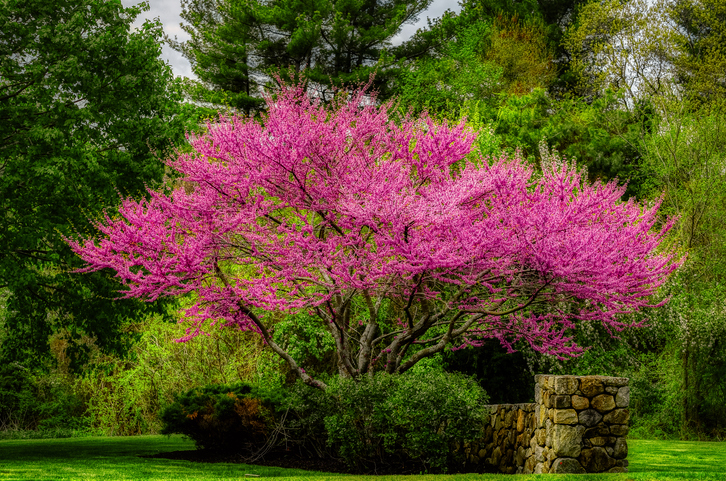
Each spring, Eastern redbud trees burst with beautiful pinkish-purple flowers, followed by the growth of lovely reddish leaves. As spring turns into summer, the heart-shaped leaves slowly turn green, transforming into a bright yellow by autumn. The Eastern redbud is a small tree that has low branches, and they’re often found growing beneath much larger trees in forests. They’re delicate-looking, with thin branches, especially when the flowers bloom in the spring.

Each summer, seed pods, called legumes, grow on the branches of an Eastern redbud. These edible legumes grow to around two inches in length.

Where Does it Grow?

Native to New Jersey all the way to northern Florida, and as far west as Missouri and northern Mexico, the Eastern redbud grows well in all kinds of soil. They’re especially abundant in the mesic woodlands throughout Kentucky. Eastern redbuds prefer moist, well-drained soil, so they thrive in the front range. They’ve also learned to adapt to Denver’s alkaline and clay soil conditions.  

These delicate-looking trees grow best in zones four through nine, allowing them to withstand the climate in most areas of Colorado. They do prefer protection from extreme weather, but can withstand temperatures as low as -30°F at elevations below 6,000 feet. 

How Big Does it Get?

Eastern redbuds are small, delicate, and beautiful. They grow to about 20 feet tall, with a spread just as wide, and their branches give them a lovely, rounded shape. Their growth rate is slower than most trees, increasing about seven to ten feet every five to six years.

What Does it Need to Grow?

Eastern redbud trees are fairly easy to grow. They adapt well and can handle a variety of conditions.

What Type of Soil Does it Need?

Eastern redbuds prefer soil that is well-drained and moderately moist, with a pH that is acid or basic. If your soil does not have access to plenty of water, your tree may benefit from regular irrigation.

How Much Light Do They Need?

Plant Eastern redbuds in areas that see full sun or partial shade. These small trees thrive in plenty of sunlight, but they also grow well in areas that receive filtered sun as well.

Are They Native to Colorado?

Although they grow well in Colorado, Eastern redbuds are not native to our state. In fact, they’re native to areas east of the Mississippi River, while the Western redbud is native to California.

Interesting Facts

  • George Washington transplanted redbuds to his gardens at Mount Vernon in 1641.
  • Redbud flowers and the legumes that grow in summer are edible, and many birds, bees, and insects feed on them throughout the year. 
  • Native Americans boiled and roasted the legume seeds for food, and they ate the flowers raw.
  • Today, in some parts of Appalachia, people use the green twigs from Eastern redbuds to spice gave meat. They call it Spicewood.
  • Many years ago, people used extracts from the inside of the bark and roots of Eastern redbuds as medicine.

If you’d like to learn more about Eastern redbud trees, contact us today. Our tree experts at American Arbor Care would be happy to provide information about trees that grow best here in Denver.

Should You Plant Aspen Trees in Denver?
americanarbor December 2, 2022

Aspen trees are known for their beautiful trunks and magnificent foliage, and it’s no wonder that many people consider adding them to their home landscapes. However, before you head out to your nearest nursery, it’s important to learn about an aspen’s needs, so you can determine whether it will thrive in your unique yard, soil, and climate.

What Do Aspen Trees Look Like?

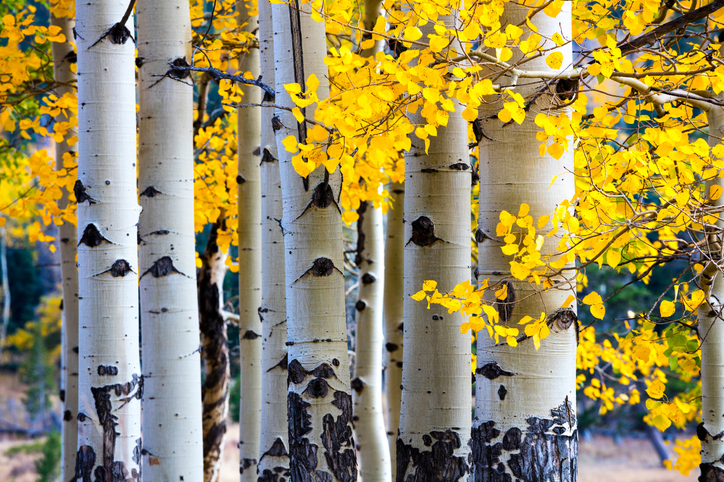
Aspens are easily identified by their bright white bark that’s dotted with black scars where branches have been self-pruned along its lower trunk. Golden heart-shaped leaves contrast with the white bark, making these trees a fan favorite for home landscaping purposes. Unfortunately, aspen trees don’t grow particularly well in every region.

Where Do They Grow?

Aspens have learned and adapted to grow in many regions, but they prefer gravelly soil that’s acidic, well-drained, and moist. This type of soil is most common in higher elevations. Here, in Denver, the soil is much different. Our soil is more alkaline (meaning it has a higher pH), and it contains more clay. This makes drainage more difficult, and fragile roots have more trouble reaching to find a water source. Denver’s climate is also drier and hotter than aspens prefer, making it more difficult for them to grow and thrive in our region. 

Although Denver’s soil and climate are not an ideal environment for aspen trees to grow, they can successfully thrive in our region — with a lot of help.

How Do They Grow?

Aspens are truly remarkable trees. In fact, one tree is just a small part of a larger organsim, called a stand. A stand of aspens is considered the world’s largest living organism, with a main life force of roots connecting all of the trees below ground. The stand of aspens in Utah’s Fishlake National Forest has been in existence for over 80,000 years, and it’s the world’s oldest — and heaviest — living organism. 

These stands (or clones) reproduce new aspen trees by sending up sprouts from the roots, and each new tree is a genetic replicate of all the growing nearby. 

How Long Do They Live?

In ideal climates, aspen trees can live for 150 to 200 years. In Denver, their life expectancies aren’t nearly as long. Since aspens are prone to disease and insect damage, they’re already fragile, and Denver’s soil and climate aren’t ideal for them to grow and thrive. Because of this, most aspen trees in Denver only live up to 25 years before they succumb to disease, insect infestation, or poor health.

How to Grow Aspen Trees in Denver

Although Denver is not the perfect location for aspen trees to grow, it’s still possible to have a healthy aspen in your landscape. In order to successfully grow this particular tree, you’ll have provide extra TLC, and you’ll have to amend your soil. When choosing the right spot to plant your aspen tree, make sure the soil is slightly acidic and well-drained. You may need to add gravel and the proper nutrients in order to achieve the right pH level. 

It’s also important to think about the root structure before planting your aspen. Will it have room to grow and spread out, without damaging the foundation of your home or other structures? Make sure you give your tree plenty of room to spread out, or else you’ll end up with problems several years down the road.

If you’d like to learn more about aspen trees, or if you’d like to know what trees to plant in Denver, we’d be happy to help. Contact us today.

When was the last time you had a landscape assessment with a Certified Arborist?

Schedule your free assessment today!